
ID|AD|NA|MFD|D_FAB
In Progress
《織勢:書寫之膚》×《牽勢之膚:共演體膜場》
Woven Force x Tensional Skin 01
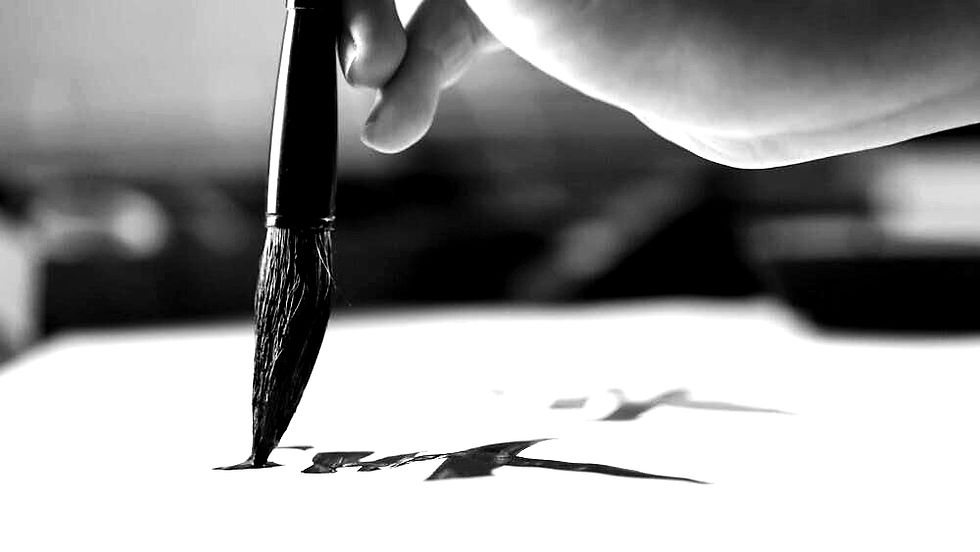

Ink Traces, Algorithms, and Spatial Regeneration
Human action, machine response, material behaviour, and algorithmic computation operate through different temporalities. Delay, residue, and asynchrony become conditions for generating difference. Co-performance emerges through their continuous coordination, where harmony exists as a provisional relation among differences.
墨痕、算法與空間再生成
The interface becomes a site of writing. Translations among body, sensor, machine, material, and image continuously introduce latency, displacement, and difference, expanding writing from a singular surface into a relational field distributed across multiple media.
01 — Interface as a Site of Writing
和諧與差異之感知構形構成
Human, machine, material, and algorithm operate through distinct temporalities. Delay, displacement, and asynchrony are treated not as errors, but as conditions for generating difference. Harmony emerges not as unity, but as a provisional coordination and resonance among heterogeneous relations.
Perceptual Configuration of Harmony and Difference_
Chapter 1
Judgment → Writing → Body
Chapter 2
Interface → Resonance → Asynchrony → Regeneration
Autonomous Judgment and Coordination of AI-Generated Value


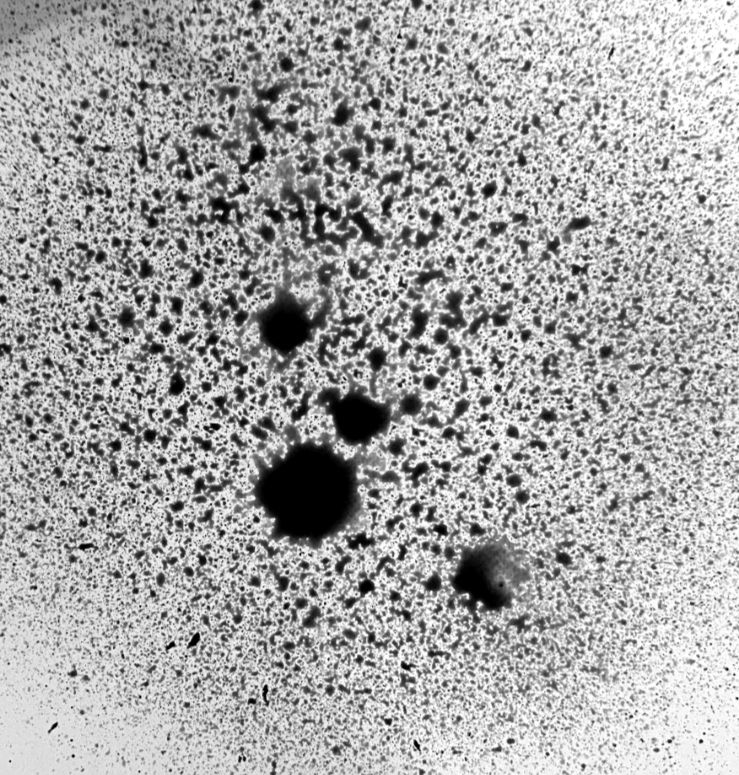


The interface becomes a site of writing. Translations among body, sensor, machine, material, and image continuously introduce latency, displacement, and difference, expanding writing from a singular surface into a relational field distributed across multiple media.
AI is not the value itself; it is the condition to be re-examined through calligraphic perception.
This research focuses on the autonomous judgment of trend-driven value. As AI, immersion, and real-time computation enter exhibition vocabularies, this performative project asks: how can calligraphy, after AI, retain its ink quality, bodily dimension, temporality, and ethics of viewing?
This inquiry resonates with Mario Carpo’s second digital turn: as the digital shifts from precision fabrication to data, difference, and generative processes, the creator’s task becomes one of judgment—discerning and validating technological possibilities through writing, calligraphy, material response, and embodied perception.


Ink traces operate simultaneously as residues and conditions for subsequent generation. Through capture, computation, and translation, they re-enter image and space, forming a recursive loop across body, material, and perception. Differences produced by one event become the conditions for the next spatial regeneration.
[RE]TurinG Harmonica Studio / Digital Integration & Fabrication Lab
Woven Momentum: The Skin of Writing × Tensional Skin: A Co-Performative Field of Embodied Writing
《織勢:書寫之膚》×《牽勢之膚:共演體膜場》
In Progress
Hengshan Calligraphy Art Center, Taoyuan, Taiwan
RETURING Works, Research Projects
2026-
Curatorial Project, Installation
趨勢之後的生成感知:AI 生成價值的自主判別與協調
Exhibition Activation Scheduled for 2028
Calligraphic Art Workshop and Public Program
Selected Exhibition Team, RETURING-led Project
2027 Hengshan Calligraphy Art Center Curatorial Open Call — Selected Proposal


生成書法的邊界重構
As AI makes generation ubiquitous, value no longer lies in generation itself, but in how generative conditions are judged, selected, and configured. Through calligraphy, body, material, and perception, this chapter reframes generation as an ongoing practice of perceptual and critical judgment.
展演性生成:身體、姿態和筆觸
Generative calligraphy reconsiders what can constitute writing. Body, sensing, algorithms, fluids, and space enter the writing process, allowing the stroke to extend beyond paper as an event that can be perceived, translated, and transformed. Calligraphy becomes the construction of conditions through which writing can emerge.
介面作為書寫場
人—機協作:一場空間書寫展演
The stroke is a trace produced through body and time. Posture, distance, and rhythm are sensed and translated into material and visual responses, positioning the body as an active agent within the generative system. The stroke emerges as an event shared by body, temporality, and matter.


Credit & Supporting / Collaborating Partners
主辦單位|桃園市立美術館(TMoFA)、橫山書法藝術館
機關單位|桃園市立美術館(TMoFA)、桃園市政府文化局
策展人暨計畫主持|謝禎原 Chen-Yuan Hsieh
展覽協調|橫山書法藝術館、桃園市立美術館(TMoFA)
工作室|再圖靈數位藝構工作室 RETURING Harmonica Studio
空間介面整合設計|謝禎原 / 再圖靈數位藝構工作室
參數化設計與形態發展|再圖靈數位藝構工作室
技術設備規劃與整合|伸茂園藝工程有限公司
木構製作與現場施工|元晟企業社(CNC 曲面製作專家)
狀態|獲選提案
_edited.jpg)
Studio: [RE]TurinG Harmonica Studio
Parametric Design and Morphological Development: [RE]TurinG Harmonica Studio
Interface Integration Design: [RE]TurinGHarmonica Studio
Technical Equipment Planning: Shen Mao Green House Ltd.
Timber Fabrication and Construction: YUAN CHENG Enterprise(CNC Curved Surface Fabrication Specialist)
Lighting Design: YAOHONG LIGHTING DESIGN CO., LTD.